The Discovery
It was found on a pristine government subdomain. No breach was needed. No exploit was required. No insider leaked it. The URL was one anyone could visit — a clean, well-maintained page sitting openly on Rwanda’s Ministry of Public Service and Labour infrastructure.
The title said it all: “BLACKLISTED EMPLOYEES FROM RWANDA PUBLIC SERVICE.”
A searchable, publicly accessible database containing the names, national identification numbers, positions, institutions, reasons for dismissal, and blacklist durations of hundreds of former government employees. No authentication. No access controls. Just data, waiting for anyone curious enough to look.
What The Page Reveals
The database contains 689 active records at the time of collection. But reporting by KT Press confirms that over 1,800 civil servants have been blacklisted over the past fifteen years. The records cut across the entire apparatus of the Rwandan state: ministries, hospitals, local district administrations, police forces, social-security agencies, and public utilities. The Rwanda National Police alone accounts for 572 blacklisted officers.
A former hospital accountant, dismissed for theft. A district official, removed for gross misconduct. A police officer, terminated for corruption. Each record comes with a full set of personally identifiable information — enough to identify, locate, and socially mark any individual on the list.
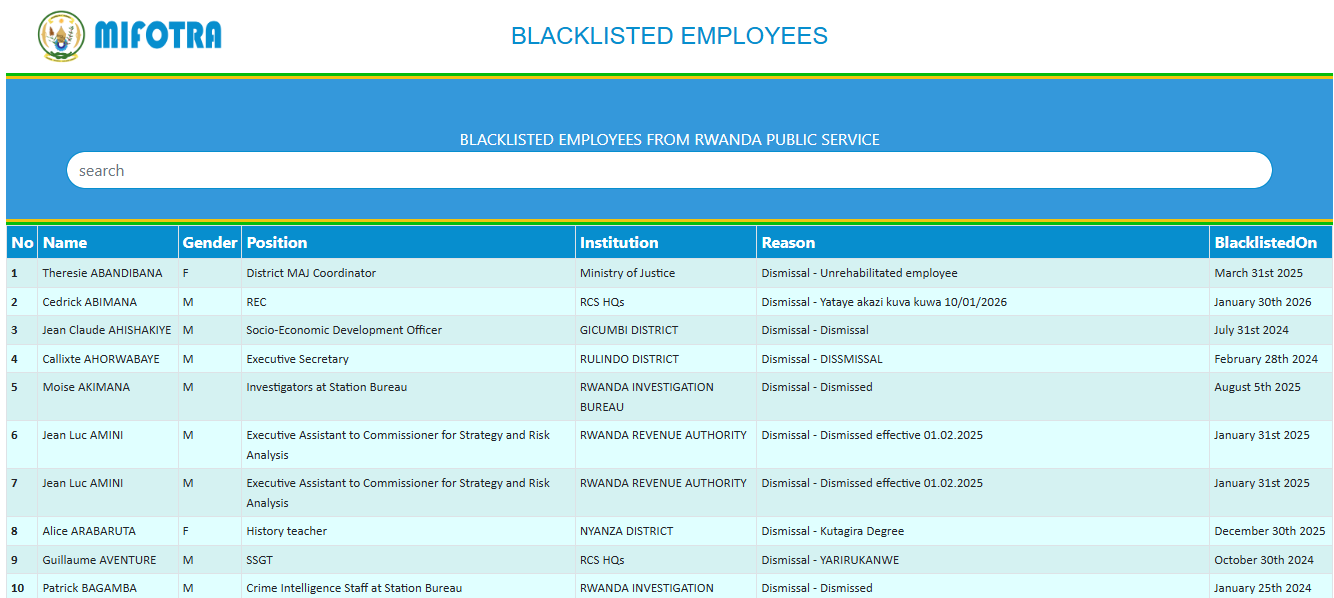
Public-facing blacklist database on mifotra.gov.rw
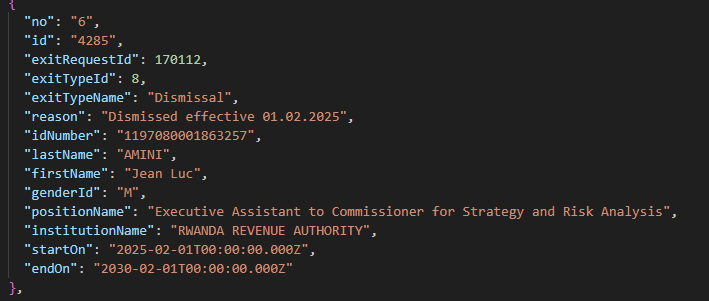
689 records exposed via JSON API with full PII
Tracing The Power Behind The List
The blacklist is operated by MIFOTRA — the Ministry of Public Service and Labour (Ministère de la Fonction Publique et du Travail). MIFOTRA is the gatekeeper of Rwanda’s civil service. It controls hiring, firing, promotions, and — critically — permanent exclusion.
The legal mechanism is straightforward: a Presidential Order governs professional ethics for public servants. When an employee is dismissed, their file is sent to the ministry and entered onto a prohibited list. Once on the list, the individual is banned from all public sector employment for a fixed period — or indefinitely.
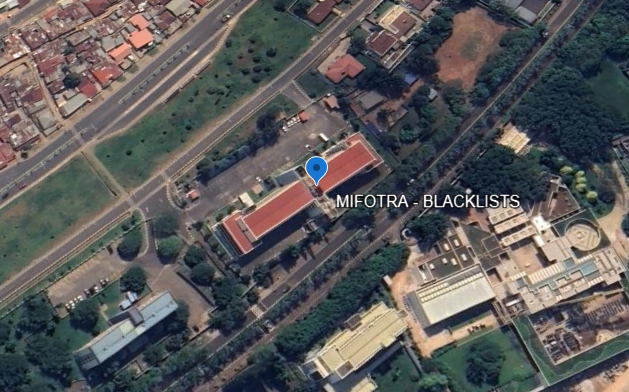
MIFOTRA HQ — 1°56’15.69"S 30°04’51.18"E, Kigali
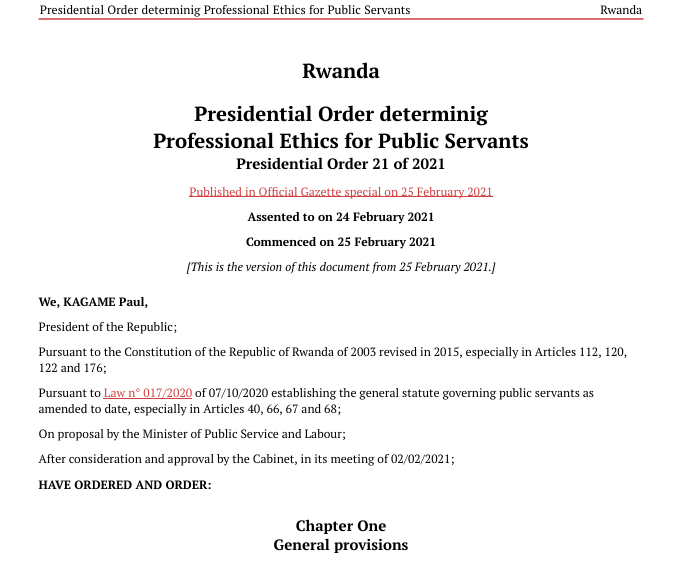
Presidential Order on Professional Ethics for Public Servants
Who Is Behind MIFOTRA
The current head of MIFOTRA is Minister Christine Nkulikiyinka. Born in 1965, Nkulikiyinka studied in Germany before embarking on a diplomatic career that placed her at critical nodes of Rwanda’s foreign policy apparatus.
Her trajectory is that of a trusted regime insider:
- Ambassador to Germany (2009)
- Ambassador to Russia (2011–2013)
- Ambassador to Sweden (2015)
- CEO of Rwanda Cooperation Initiative (2022)
- Minister of Public Service and Labour (August 2024 – present)
Each posting deepened her relationship with the Kagame government. Each role expanded her network. By the time she was appointed to lead MIFOTRA, she had spent over a decade as one of Rwanda’s most connected diplomats.

Minister Christine Nkulikiyinka — former ambassador to Russia
The Russia Connection
Nkulikiyinka’s ambassadorial posting to Moscow (2011–2013) is not a footnote — it’s a direct connection to one of Rwanda’s most significant strategic partnerships.
In December 2018, Rwanda and Russia signed an intergovernmental agreement on cooperation in the peaceful use of nuclear energy. The agreement laid the foundation for what would become one of Rosatom’s most ambitious African projects.
In October 2019, at the Russia-Africa summit in Sochi, the agreements were expanded. Rosatom committed to building a Nuclear Science and Technology Centre (CNST) in Rwanda, featuring a multi-purpose research water-cooled reactor with capacity up to 10 MW. The CNST would comprise six sections: Research Reactor and Lab Complex, Centre for Nuclear Medicine, Multipurpose Irradiation Center, Radiobiology Laboratory and Greenhouse, Education and Training Complex, and Radiation Material Science Complex. Rwandan personnel would be trained in Russia. Russian engineers would be deployed to Kigali.
Rwanda’s Parliament ratified the agreement in 2024, making the nuclear cooperation program a matter of binding law.
The program is overseen by the Rwanda Atomic Energy Board (RAEB), established by Presidential Order on December 3, 2020, operating under the Ministry of Infrastructure. RAEB’s publicly accessible portal at raeb.prod.risa.rw outlines its mandate: regulating nuclear and radiation safety, managing the CNST project, and coordinating with international partners including Rosatom and the IAEA.
But Rosatom is not Rwanda’s only nuclear partner. RAEB has signed an MOU with NANO Nuclear Energy to integrate small modular reactors (SMRs) and microreactors — including units codenamed “ZEUS” and “ODIN” — across Rwanda. A separate agreement with Dual Fluid targets a first-of-its-kind liquid fuel, lead-cooled fast reactor demonstration unit, with completion targeted for 2026–2028. Rwanda plans for nuclear power to supply 60–70% of its energy mix in future decades, with its first SMR operational in the early 2030s.
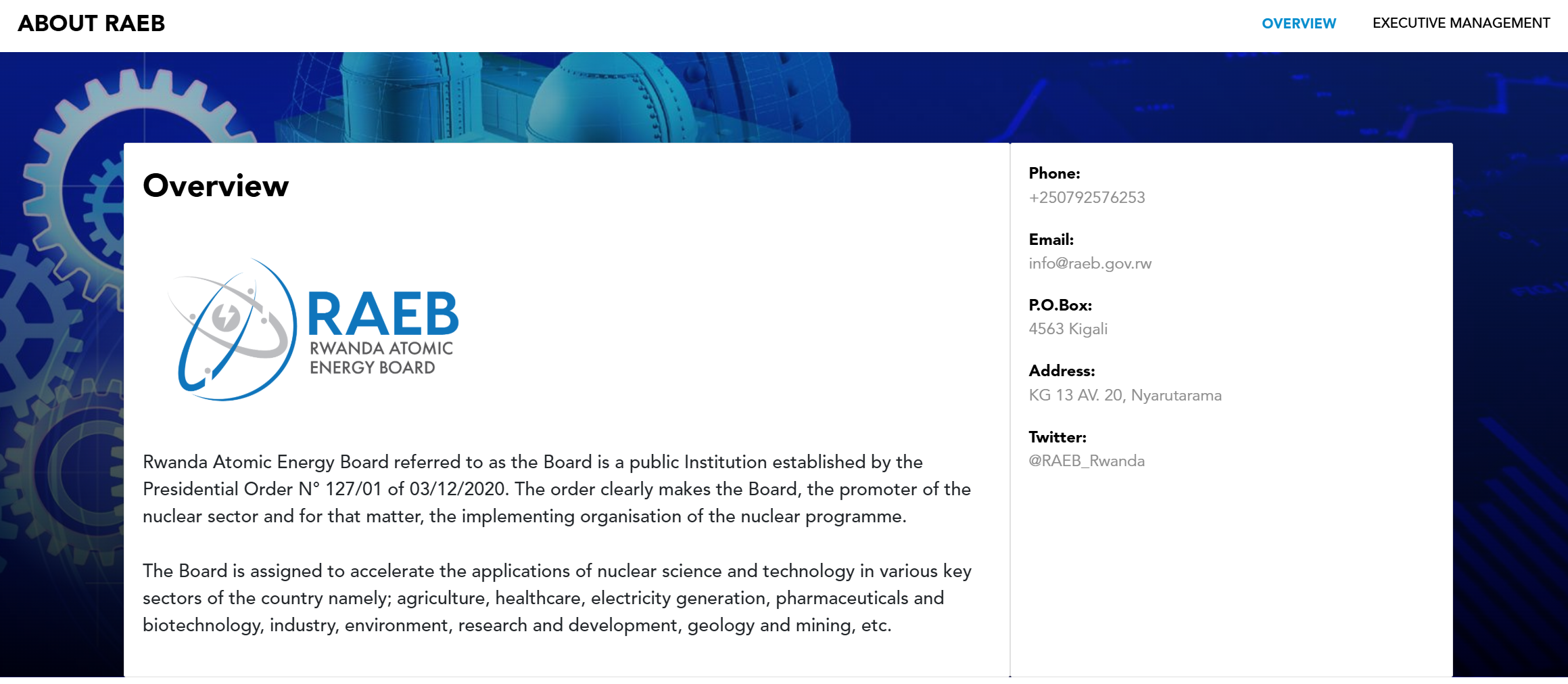
Rwanda Atomic Energy Board (RAEB) — raeb.prod.risa.rw
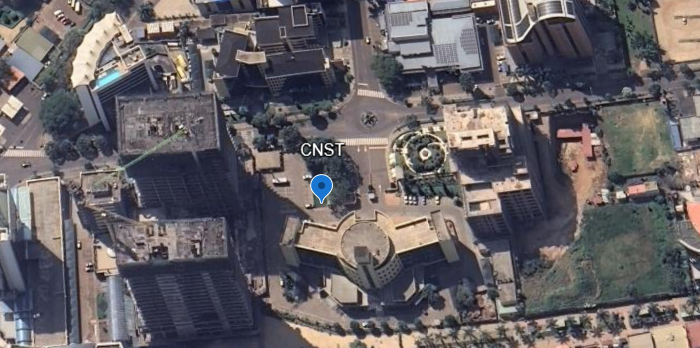
CNST Nuclear Centre — 1°56’53.38"S 30°03’38.05"E
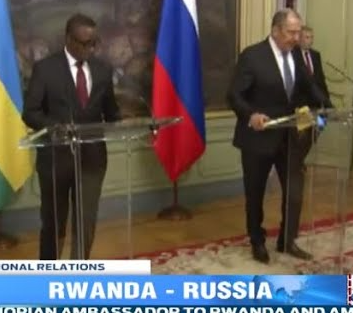
2018 Russia-Rwanda intergovernmental nuclear agreement
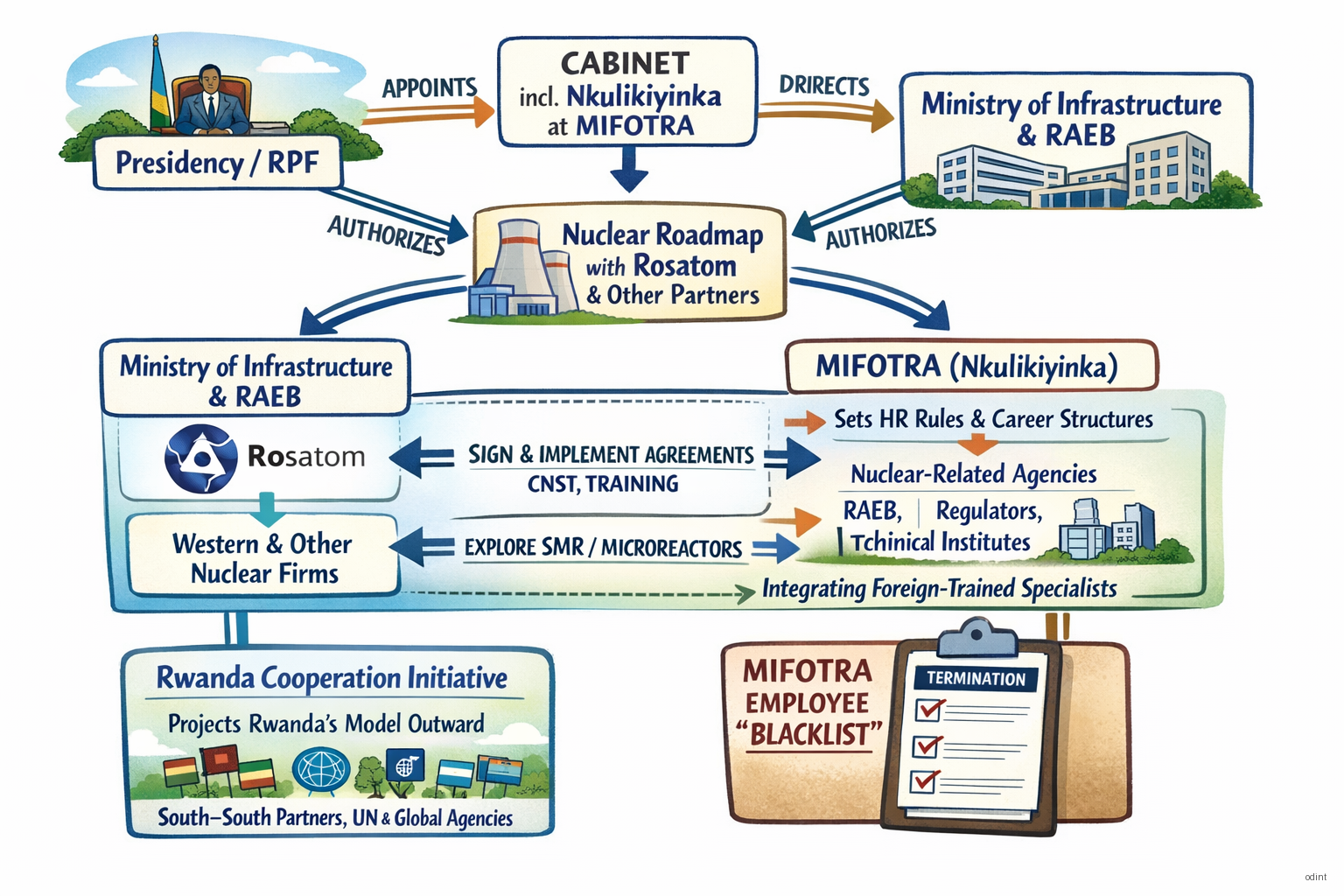
Rosatom CNST implementation roadmap
Following The Money
MIFOTRA’s operations are funded through a combination of Rwanda’s national budget and international development partnerships. The list of funders reads like a who’s who of Western development agencies: UNDP, USAID, and the Mastercard Foundation have all channeled resources into Rwanda’s civil service reform programs.
The blacklist itself doesn’t trace to Moscow — it’s domestic. It was built with Rwandan legal authority, maintained on Rwandan government infrastructure, and populated by Rwandan bureaucratic processes. But it doesn’t need foreign help to be oppressive.
The contradiction is stark: Western development money flows into the same ministry that operates a public database of permanently excluded citizens, while the minister who leads it spent two years building relationships in Putin’s Moscow.

USAID partnership with MIFOTRA
Western development funding documentation
A Public Database In An Authoritarian Context
This is not just an HR archive. It is a searchable public database — designed to be consulted, designed to be visible, designed to ensure that anyone considering hiring a blacklisted individual will find the mark before the person walks through the door.
The context makes it worse. Freedom House rates Rwanda “Not Free” with a score of 36/100 on internet freedom. Mass surveillance is institutionalized: Law 60/2013 requires service providers to ensure systems are technically capable of supporting interceptions at all times. Credible reports indicate the government has acquired and deployed NSO Group’s Pegasus spyware against political opponents and human rights defenders, including members of the diaspora. In August 2024, new regulations required biometric verification for SIM card registration, with providers obligated to retain data for 10 years.
In a system where dissent is risky, where digital surveillance is pervasive, and where independent journalism, opposition politics, and civil society operate under constant pressure, a permanent public mark of disgrace is not merely an administrative tool. It is a mechanism of social control.
The blacklist allows a seven-year ban period, after which reinstatement is theoretically possible — but only with evidence of “good conduct.” In practice, no appeal mechanisms are documented alongside the data. No clear path back. Once the state puts your name on the list, you exist in a permanent category: unrehabilitated employee.
In the language of the database itself, the most common label is chilling in its bureaucratic simplicity: “Unrehabilitated employee.”
Raw Data & Downloads
Sources & References
- MIFOTRA Blacklist Database — Official government blacklist portal (Web Archive)
- KT Press: 1,800 Government Workers Blacklisted — July 2018
- Christine Nkulikiyinka — Wikipedia
- Rwanda Ministry of Infrastructure: Rwanda-Russia Nuclear Cooperation
- Rosatom: Russia-Rwanda Nuclear Cooperation
- Rwanda Atomic Energy Board (RAEB) — Overview
- NANO Nuclear MOU with RAEB
- Dual Fluid: Demonstration Reactor Agreement with Rwanda
- Freedom House: Rwanda Freedom on the Net 2025 — Score: 36/100 (Not Free)
- Privacy International: Rwanda’s Stranglehold on Privacy
- Media Defence: Authoritarianism and Digital Surveillance in Rwanda
- U.S. State Department: 2024 Human Rights Report — Rwanda
Related Videos
OSINT Disclaimer
This report is based entirely on open-source intelligence (OSINT). No classified information was accessed. No confidential sources were used. No systems were breached. All data referenced in this investigation was publicly available at the time of collection.