Summary
Tumeremo sits in the region known as Venezuelan Guayana, part of the Guiana Shield, one of the oldest geological formations on the planet, located on the northeastern foothills of Bolívar state, where the Caroní and Cuyuní river basins converge. This area contains significant mineral reserves, including gold, diamonds, iron, bauxite, coltan, and other strategic minerals, making it a high economic value zone and, consequently, a focus of territorial disputes. The development of mining activity has attracted people from other regions of Venezuela and neighboring countries, generating processes of cultural mixing but also tensions over territorial control. Indigenous peoples have experienced progressive displacement, although some have formed marital and commercial alliances with new settlers.
The economy of Tumeremo predominantly revolves around mining, both legal and illegal. According to official estimates, approximately eight out of ten inhabitants work in trades related to the extraction, processing, or commercialization of gold and other minerals.
A crucial element for understanding the context in which the massacre occurred is the creation of the Orinoco Mining Arc, decreed by Nicolás Maduro’s government just nine days before the events, on February 24, 2016. This megaproject, which covers 111,843 square kilometers (equivalent to 12.2% of national territory), included precisely the area where the massacre was perpetrated.
The implementation of this project generated expectations of regularizing mining activity, but it also intensified territorial disputes among different armed groups seeking to position themselves to control future concessions.
The Tumeremo Massacre
The Tumeremo Massacre of March 4, 2016 represents one of the most serious episodes of systematic violence in the mining areas of southeastern Venezuela. This event, which resulted in the killing of at least 17 people officially confirmed, became a turning point that exposed complex criminal dynamics, state absence, and territorial conflicts characterizing the mining region of Bolívar state in southern Venezuela.
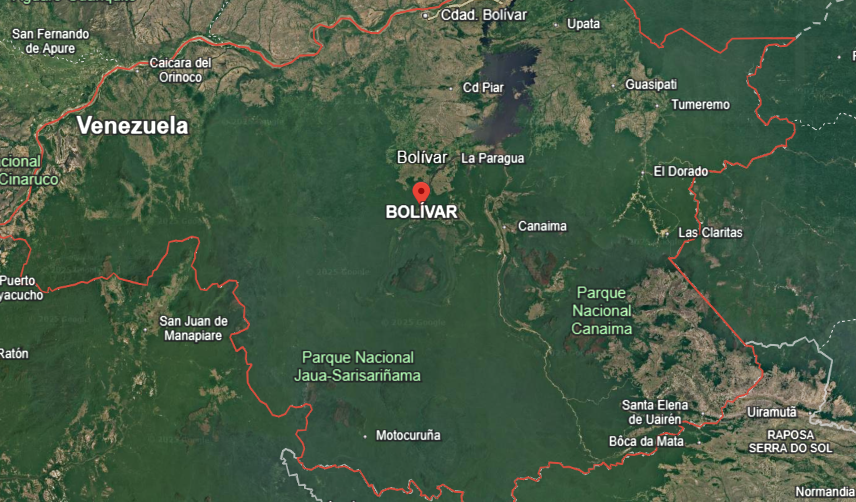
On March 4, 2016, in the early morning hours, an armed group led by Ecuadorian national Jamilton Andrés Ulloa Suárez, known as “El Topo,” perpetrated a massacre against mining workers near the Atenas Mine, located on the property of the same name, within the jurisdiction of Tumeremo, Sifontes municipality, Bolívar state, Venezuela.
The event was characterized by extreme brutality, with victims executed by gunshots to the head and later moved to mass graves to conceal evidence. Official investigations confirmed the discovery of 17 bodies in a mass grave located at the Nuevo Callao mine, approximately 25 kilometers from the site of the initial events. However, early testimonies suggested that the number of victims could have been higher, with reports of up to 28 missing persons.
The initial response by regional authorities was categorical denial, labeling the reports a “political setup” by Governor Francisco Rangel Gómez. This attitude changed drastically when social pressure from relatives, who blocked Highway Troncal 10 for several days, and the intervention of the Attorney General’s Office forced a thorough investigation that culminated in the discovery of forensic evidence.
The case highlights the existence of organized criminal structures operating with impunity in mining areas, territorial control exercised by armed groups known as “sindicatos,” and apparent complicity or negligence by sectors of the regional state apparatus. It also reveals the extreme vulnerability under which artisanal miners operate in a region where the informal gold economy has de facto replaced the country’s formal economic and security structures.
Location and Geographic Coordinates
Tumeremo is located in General Antonio Domingo Sifontes municipality in Bolívar state, in southeastern Venezuela. The precise coordinates of the town point to a locality strategically situated on Highway Troncal 10, the main road artery connecting Venezuela with Brazil and the only overland route to the north of the country from this border region.
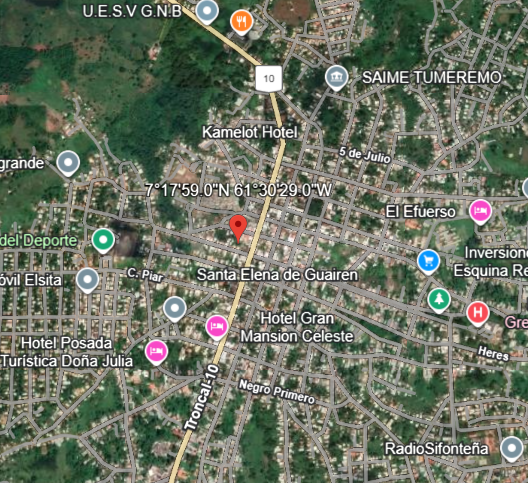
Primary Crime Area
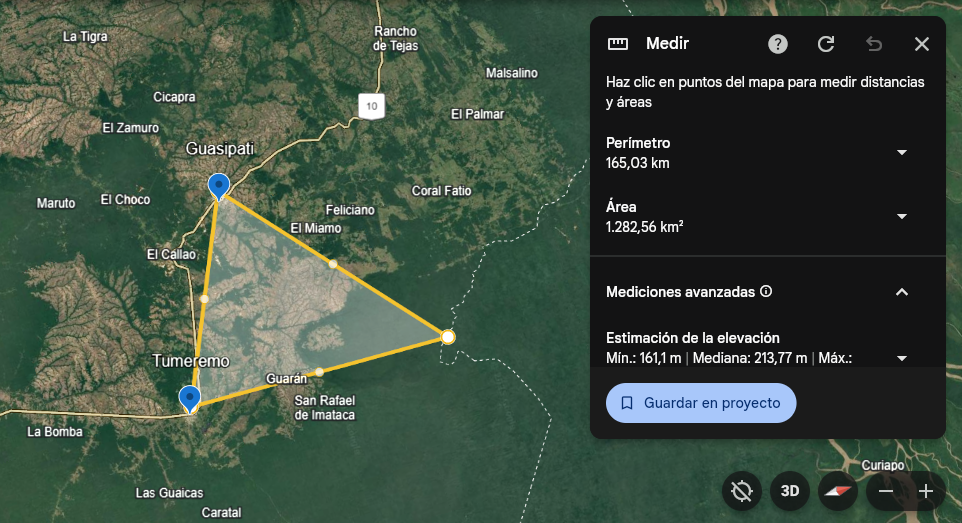
The Atenas Mine, the scene of the massacre, is located on the property of the same name, on the border between Sifontes and Roscio municipalities. This location is approximately an hour and a half by road from the center of Tumeremo, toward the town of Guasipati. The exact coordinates of this site have not been officially disclosed for security reasons, but sources indicate it is in a hard-to-access area within tropical forest.
Evidence Discovery Zone
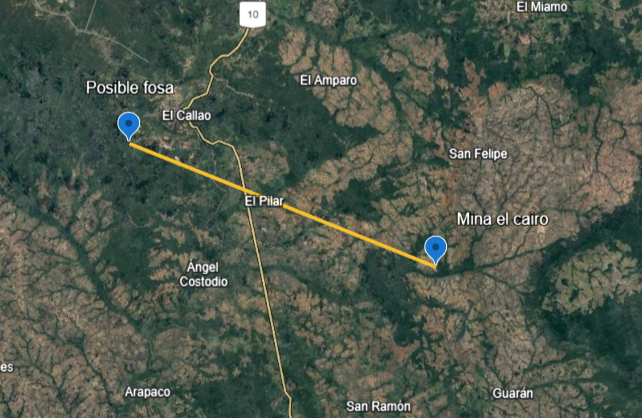
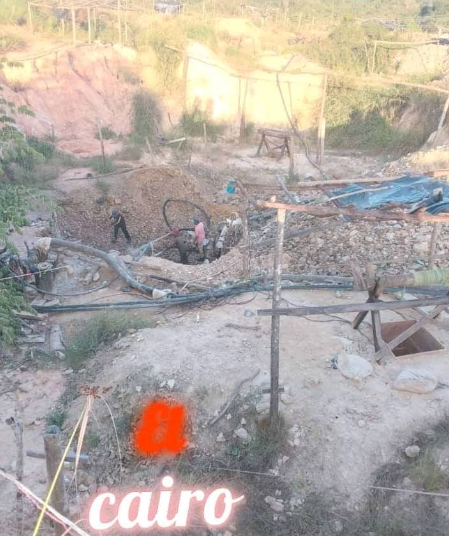
The mass grave where the 17 bodies were found was located at the Nuevo Callao mine, approximately 25 kilometers from the site of the initial massacre. This mining area is part of the larger complex of gold operations in the region, characterized by multiple mining camps and access routes controlled by different criminal organizations. The exact location of this site is unknown to the public, but according to on-the-ground investigation we can be almost certain the place would be located at the following location.
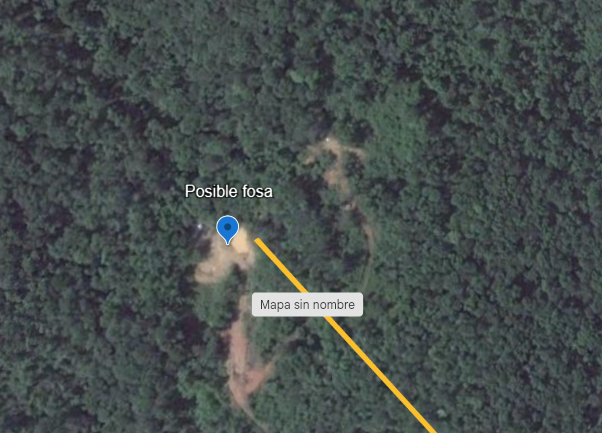
The indicators suggesting this would be the exact location are based on distance similarities reported by people currently operating at another illegal mine, “El Cairo,” located within the Atenas Mine AOI.
Victims and responsible
Analysis of the circumstances preceding the massacre reveals that the main motive for the crime was a territorial dispute among criminal organizations for control of gold deposits. The official investigation determined that Jamilton Ulloa “El Topo” ordered the attack against workers linked to the rival gang led by Alexandro Lisandro González Montilla, alias “El Gordo Lisandro.”
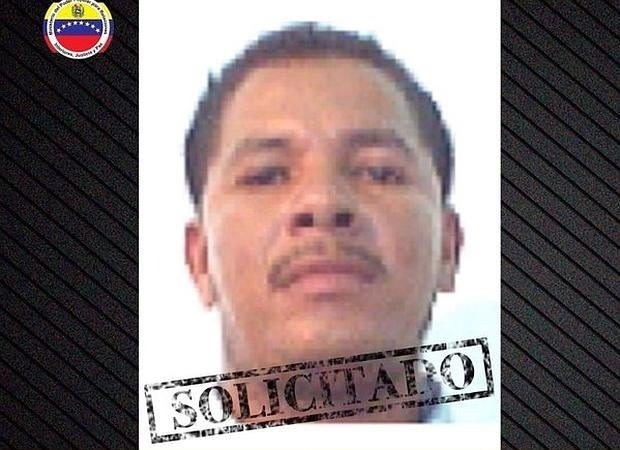
The Atenas mine had recently been identified as a highly productive deposit, intensifying competition among different mining “sindicatos.” These groups operate as criminal organizations with paramilitary structures, establishing territorial control systems where they charge taxes in gold to artisanal miners in exchange for allowing them to work in certain areas.
The functioning of these sindicatos follows patterns similar to other Latin American criminal organizations. The leaders of these groups, known as “pranes,” maintain their authority through the systematic use of extreme violence as a deterrent mechanism.

Testimonies collected during the investigation described punishment methods including mutilations, public dismemberment, and exemplary executions. These practices aim to create a climate of terror that ensures the subordination of the mining population and discourages any challenge to the authority of the dominant group. The close timing between the creation of the Orinoco Mining Arc and the massacre suggests the crime may also have had motivations related to strategic positioning in light of the changes in national mining policy. “El Topo’s” gang would have sought to consolidate control over high-value areas before implementation of new regulations.
Additionally, testimonies indicate some of these criminal groups-maintained relationships with sectors of the regional public administration, allowing them to operate with a degree of impunity. This corruption network would have facilitated illicit activities and contributed to the weak initial response by authorities to reports of the massacre.
The forensic investigation fully identified 13 of the 17 victims found in the mass grave. The demographic profile shows they were mainly young men, aged between 18 and 31, engaged in artisanal mining as a means of subsistence.
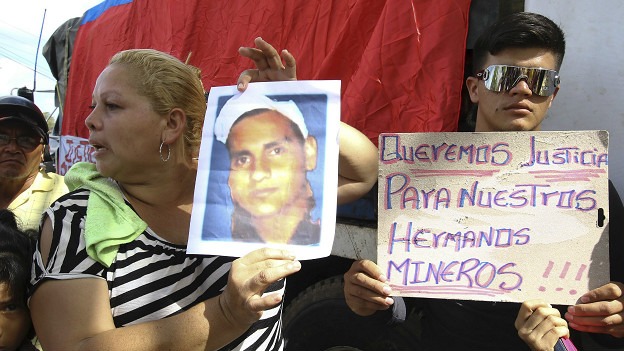
Among the identified victims are:
Ángel Ignacio Trejo Sosa, 30, son of J.J. Cuello, director of Radio Bonche in Tumeremo; Cristóbal Heredia, 24; Gustavo Guevara Aguinagalde, 22; Jesús Alfredo Aguinagalde, 25; Jesús Gregorio Romero Ara, 22; José Ángel Ruiz Montilla, 25; José Gregorio Nieves Aguinagalde, 25; Luis Díaz, 24; two young women, Marielys Ruiz, 21, and Mary Dalia Ruiz, 18; Néstor de Jesús Ruiz Montilla, 31; Roger José Romero Ángel, 20; and Efraín Rafael Robles, 22. The victims belonged to the most vulnerable sector of the mining population as artisanal workers without links to criminal organizations, who depended on gold extraction for their economic survival.
Detailed Timeline of Events
Immediate Background (February 2016):
On February 24, 2016, the national government decreed the creation of the Orinoco Mining Arc, generating expectations and tensions in traditional mining areas.
Execution Phase (March 4, 2016):
In the early hours of March 4, 2016, approximately between 5:00 and 6:00 a.m a group of between 30 and 40 armed men, led by “El Topo” and his lieutenants “Miguelito” and “El Indio,” carried out an ambush against miners headed to the Atenas mine. The attackers used long-range firearms and proceeded to systematically execute the victims by gunshots to the head.Survivor testimonies described a militarily planned operation, where the attackers blocked escape routes and proceeded methodically with the executions. The bodies were then loaded onto a dump truck and transported to a remote location for concealment.
Concealment Phase (March 4–5, 2016):
In the following hours, the perpetrators transported the bodies approximately 25 kilometers to the Nuevo Callao mine, where they dug a mass grave approximately five meters deep. The bodies were placed in black plastic bags before burial, in an attempt to conceal evidence and hinder later identification.
Complaint and Protest Phase (March 5–10, 2016):
On March 5, when the miners did not return from their work, their relatives began searching and later set up a blockade on Troncal 10, the main road artery in the region. This protest action paralyzed traffic to Brazil and forced the attention of national authorities.
Official Denial Phase (March 7–9, 2016):
On March 7, the governor of Bolívar state, Francisco Rangel Gómez, categorically denied the occurrence of the massacre, calling it a “media show” and a “political maneuver” by the opposition. This official position was maintained for several days, despite growing evidence and pressure from relatives. In parallel, pro-government sectors attempted to discredit the complaints by suggesting partisan political motivations and questioning the veracity of the testimonies presented.
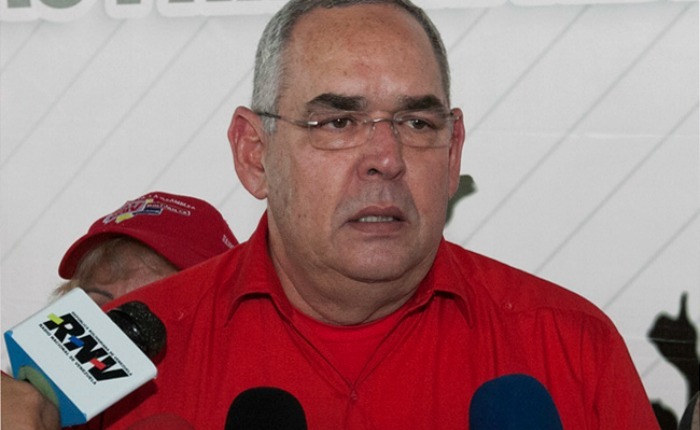
Rangel Gomez currently sanctioned by the Canadian Government for human rights violations in 2017, by the U.S. Government for corruption, and by the Panamanian government for money laundering
State Intervention Phase (March 10–13, 2016):
On March 10, amid persistent protests and media pressure, the government decided to militarize Tumeremo, deploying National Guard troops to clear the demonstrations. However, national-level political pressure had increased considerably, forcing an official investigation.On March 11, the Public Ministry confirmed the preliminary identification of 16 of the missing persons, marking the first official recognition that a large-scale criminal event had indeed occurred.
Discovery Phase (March 14–15, 2016):
On the night of March 14, 2016, Attorney General Luisa Ortega Díaz officially announced the discovery of 17 bodies in a mass grave, thus confirming the veracity of the initial reports. The bodies were found at the Nuevo Callao mine, in black plastic bags, with clear evidence of death by firearm.
Official Recognition Phase (March 16, 2016):
On March 16, Governor Rangel Gómez finally publicly admitted that a massacre had occurred, retracting his previous statements.
Pursuit Phase (March–May 2016):
In the following months, security authorities launched an intense search for “El Topo” and his collaborators. This operation included intelligence deployments in multiple states and coordination among different security bodies. On May 6, 2016, Jamilton Ulloa “El Topo” was killed during a SEBIN operation at the El Limón mine, Nuevo Callao sector, near Tumeremo.
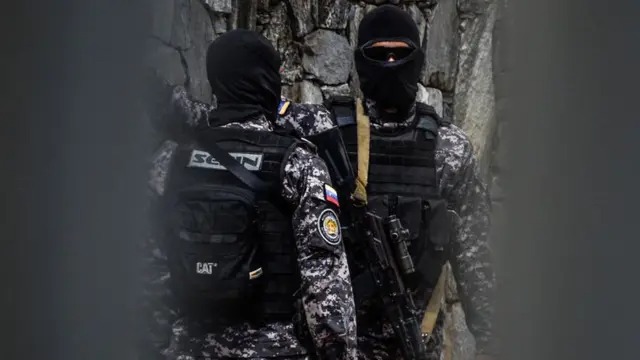
The Bolivarian National Intelligence Service (SEBIN) is, according to OHCHR, OAS, and UN, one of the Venezuelan state agencies that most flagrantly violates human rights.
Changes in Criminal Dynamics
The death of “El Topo” did not eliminate organized criminal presence in the region but instead provoked territorial reorganization among different groups. Subsequent testimonies indicate other criminal leaders disputed the areas previously controlled by his organization, generating new episodes of violence.
This criminal fragmentation paradoxically created more volatile conditions, as the multiplicity of competing groups increased the frequency of clashes and the unpredictability of violence. Artisanal miners were exposed to multiple and contradictory demands from different criminal organizations.
The massacre catalyzed the organization of groups of victims’ relatives and human rights organizations that began systematically documenting violence in mining zones. These organizations developed mutual support networks and political pressure to demand justice and state protection.However, the activities of these organizations were limited by security conditions and persistent threats against activists and human rights defenders. Many of their activities had to be carried out from outside the region or under conditions of anonymity.
The real problem
The Tumeremo massacre of March 4, 2016 constitutes a paradigmatic case of multiple failures by the Venezuelan state in exercising its basic functions of citizen protection and maintaining public order in the mining areas of the country’s southeast. The event reveals the consolidation of a model of criminal co-governance where armed organizations de facto exercise state functions in territories rich in natural resources but abandoned by official institutions.
The victims’ profile reflects the extreme vulnerability of artisanal mining workers, who operate in conditions of forced illegality due to the absence of adequate regulatory frameworks and are left without protection from the violence of criminal organizations that territorially control the extraction zones.
The structure and operational methods of the criminal organization responsible for the massacre reveal a level of sophistication that included paramilitary training, networks of institutional corruption, and systems of territorial control that combined extreme violence with quasi-state services for the populations under their dominion.
Failures in the initial forensic investigation, inadequate witness protection, and technical limitations in evidence processing demonstrate the need to substantially strengthen the state’s investigative capacities in remote areas where complex criminal organizations operate.
The areas of interest identified for future investigations suggest that the Tumeremo massacre may represent only the tip of the iceberg of a broader pattern of systematic violence in Venezuelan mining zones.
The Tumeremo massacre must be remembered not only as a specific tragedy but as a warning about the consequences of state abandonment and tolerance toward organized criminal structures. The pursuit of justice for the victims and their families remains incomplete, and preventing new similar episodes requires profound transformations in the conception and exercise of state sovereignty in traditionally marginalized but strategically important territories for national development.
Investigator’s Note
This report is based entirely on open-source intelligence (OSINT). No classified information was accessed. No confidential sources were used. Everything documented here is publicly available — if you know where to look.
The significance lies not in secret revelations, but in connecting the dots: showing how criminal mining structures, territorial disputes, state abandonment, and official cover-up operate together rather than as isolated events.
That system is designed to control extraction zones, terrorize local populations, and preserve authoritarian and criminal power across the mining corridor of Bolivar state. And it remains active today in the same geography that produced the Tumeremo massacre.